Locked Up: How Incarceration Impacts Homelessness
Homelessness Meets Incarceration
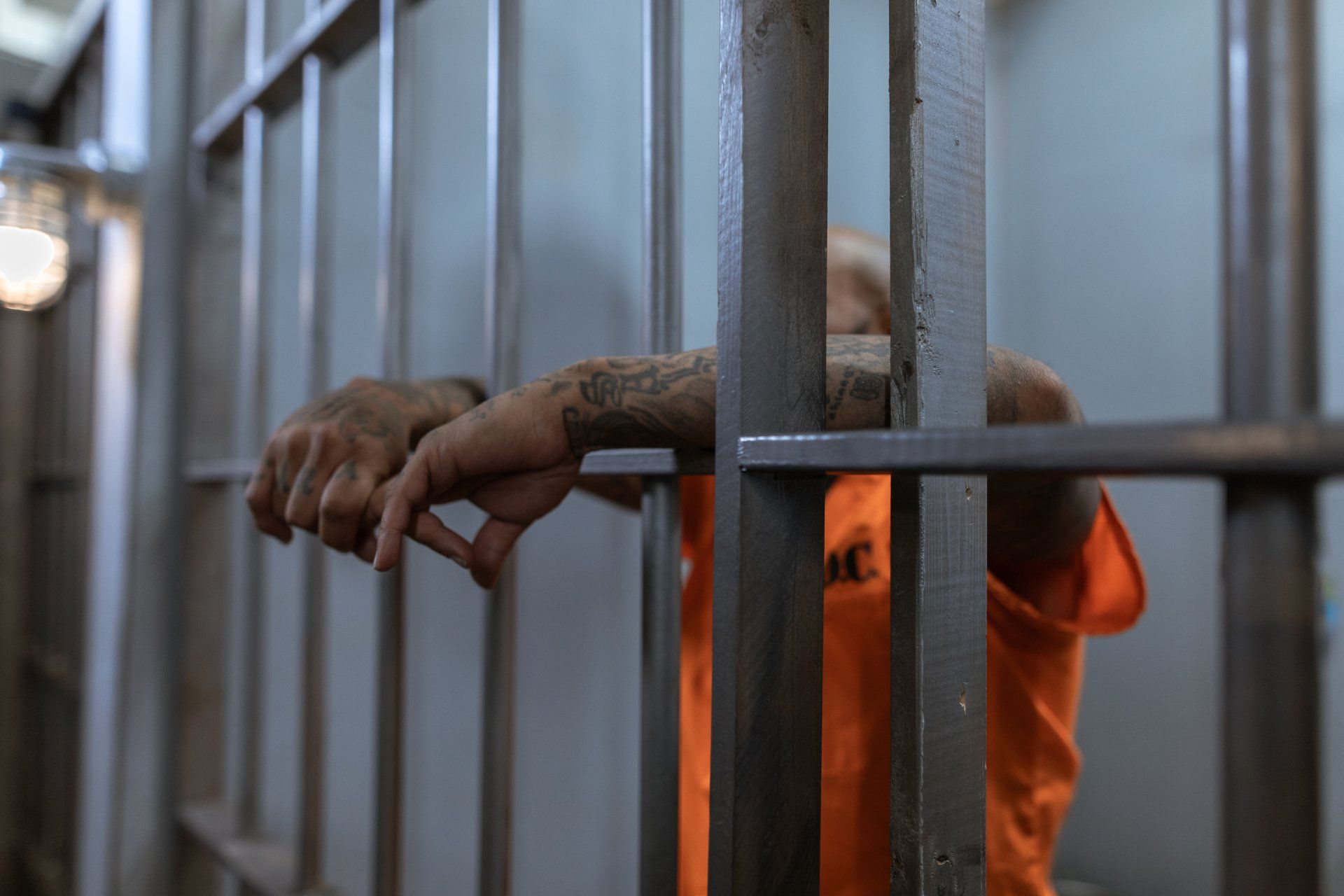
"National research suggests that up to 15% of incarcerated people experience homelessness in the year before admission to prison. And city- and state-level studies of homeless shelters find that many formerly incarcerated people rely on shelters, both immediately after their release and over the long term." - PrisonPolicy.org
What's the connection between being incarcerated and being homeless? Studies show that homelessness is higher among specific populations, including those who have been incarcerated more than once and those who have recently been released from jail. ( See stats )
Unsheltered homeless people are more likely to "interact with the justice system" than sheltered homeless people. ( urban.org ) The reason? Unsheltered homeless people have nowhere to go - they have no home, and therefore, live their lives in the open. This includes sleeping, urinating, and asking for money - all actions which are criminalized by society.

"Almost 50,000 people a year enter homeless shelters immediately after exiting incarceration." - endhomelessness.org
“We suspected that many of the problems in our communities for which elected officials seek criminal justice system solutions are actually problems of homelessness, mental illness, and untreated substance use disorder,” said Doug Smith, Texas Criminal Justice Coalition (TCJC) Senior Policy Analyst. (One Size FAILS All, TCJC Report)
Mental and Physical Health
Ex-prisoners are not equipped for the transition back into civilian life. Pre-existing mental illness is exacerbated by incarceration, and is a leading cause in both substance abuse and homelessness. Among ex-offenders, those with mental illness have a significantly higher than average rate of homelessness and housing insecurity. “37% of people in state and federal prisons have been diagnosed with serious psychological distress and 66% of people in federal prisons reported not receiving any mental health care while incarcerated.” (Mental Health, prisonpolicy.org)
The lack of assistance and criminalization of mental illness leads to and increases due to incarceration and police interaction. Coming out of incarceration, ex-prisoners can experience increased rates of post-traumatic stress, anxiety, impaired decision-making, and more, making it harder for them to function in a society with little resources in place to treat them. (Indicators of Mental Health Problems Reported by Prisoners and Jail Inmates 2011 - 12, U.S. Department of Justice)
Because of cost and space, many patients suffering from debilitating mental illnesses are discharged from hospitals without proper housing or resources set up and leading to homelessness, and eventually, incarceration. In a study of 132 patients discharged from Columbus State Hospital in Ohio, 36% became homeless within six months. (250,000 mentally Ill are Homeless. 140,000 seriously mentally Ill are Homeless, mentalillnesspolicy.org)
At the Shelterhouse in Cincinnati, Ohio, 47% of the homeless individuals served by the organization were mentally ill and 56% disabled. - (2021 Shelterhouse Statistics, shelterhousecincy.org)
Mental illness is indisputably a primary factor in homelessness and incarceration alike, and is escalated when it interacts with both. In addition, mental illness is a common cause of substance abuse and addiction which is heavily criminalized in the United States and leads to a higher rate of incarcerated homeless individuals who suffer from addiction. When a homeless individual becomes addicted to drugs or alcohol, most of the money they can come up with goes to pay for their addiction. Addicts and substance abusers are faced with disciplinary action instead of access to rehabilitation and mental health assistance which perpetuates the cycle of substance abuse, homelessness, and incarceration.
Housing and Shelter
Another factor in the relationship between homelessness and incarceration is housing affordability and rent issues. “Stable housing is the foundation of successful reentry from prison. Data shows that many formerly incarcerated people struggle to find places to live due to discrimination by public housing authorities and private property owners.” These authorities and owners implement their own screening criteria to determine if an applicant merits housing.
The process relies upon criminal record checks as a primary source of information. Along with this, credit checks, high security deposits, and other housing application requirements such as professional references serve as concrete barriers for people coming out of incarceration. With a lack of access to stable housing, the access to healthcare services, job security, and educational programs is also limited and virtually impossible. – https://prisonpolicy.org/reports/housing.html#raceandgender
While it was found that 203 out of every 10,000 formerly incarcerated people were homeless, nearly three times as many - 570 out of every 10,000 - were housing insecure. Research has also uncovered notable demographic differences by expanding our view to the housing insecure population: Hispanics, for example, were more likely than people of any other race to live in marginal housing. Men had much higher rates of marginal housing than women, resulting in high rates of housing insecurity. And older formerly incarcerated people experienced the highest rates of housing insecurity. - https://www.prisonpolicy.org/reports/housing.html#raceandgender
Oppressed Populations & Discrimination
The role race, gender, and sexuality plays in incarceration and homelessness must be addressed in order to better understand the unique circumstances populations face. Oppression and discrimination hinders individuals from obtaining the resources they need and being treated with fairness and compassion. Because of disproportionate policing in Black and Latinx communities and racial disparities in convictions and sentencing, Black and Latinx people are more likely to be involved with the criminal justice system and, as a result, are more likely to face housing discrimination because of a criminal record. Excessive policing is a major factor in the misrepresentation of criminality in Black and Latinx communities. This discrimination follows these communities through the justice system and prevents equal access to resources after exiting.
https://housingmatters.urban.org/feature/communities-can-better-prevent-homelessness-through-housing-and-justice-system-partnerships
Gender, race, and ethnicity combine to put women of color at greater risk of unsheltered homelessness. Black women experience the highest rate of sheltered homelessness – nearly four times the rate of white men, and twice as high as the rate of Black men. Women of color have been excluded from social resources necessary to succeed after incarceration at a rate higher than other populations.
(See the statistics)- https://prisonpolicy.org/reports/housing.html#raceandgender
These disparities between populations and unequal access to resources must be recognized. Working toward more inclusive and anti-oppressive policies is essential to creating opportunity for ex-prisoners and homeless individuals.
There is a strong link between incarceration and homelessness among formerly incarcerated LGBTQ youth. LGBTQ youth face higher rates of detention and incarceration. “A 2015 study shows that 20% of all youth in the juvenile justice system identify as lesbian, gay, bisexual, questioning, gender nonconforming, or transgender, even though they compose only 5-7% of the total U.S. youth population.” This high percentage of justice-involved LGBTQ may be driven by their even higher rates of homelessness. Homelessness is the greatest predictor of involvement with the juvenile justice system, and 40% of homeless youth identify as LGBT. Incarceration can be detrimental to young people’s physical and mental health, their relationships, and their social and economic prospects. Juvenile delinquency records can prevent them from accessing housing and finding employment once released, and they face similar discrimination but public housing authorities as incarcerated adults. Finding stable housing post-release and eradicating discrimination based on criminal records is of utmost importance to avoid cycles of reincarceration, especially when this cycle starts at such a young age.
https://prisonpolicy.org/blog/2019/01/22/lgbtq_youth/
As youth transition into adulthood, the disproportionate amount of LGBTQ homeless and incarcerated people continues to rise. Lesbian, gay, and bisexual people are incarcerated at three times the rate of straight people.
https://prisonpolicy.org/blog/2019/01/22/lgbtq_youth/
If these forms of intersectional discrimination and layered oppression are not addressed, there cannot be steps made toward equity for all populations.
What can be done about this interaction of homelessness and incarceration?
In its report, the National Low Income Housing Coalition states that "the causes of homelessness among former prisoners include discrimination, a reliance on criminal records to screen potential tenants, the shortage of affordable housing, large security deposits, and other application requirements like professional references." (Nowhere to go: Homelessness among formerly incarcerated people)
Also noted as causes of homelessness among the incarcerated: lack of safe and stable housing, lack of healthcare services, obtaining employment, and access to educational opportunities.
TCJC recommends a better reentry system that helps people understand their housing options before they leave prison. The system should also help them obtain housing and rental assistance.
"The report also encourages cities and states to “ban the box” asking about criminal records on housing applications, end the criminalization of homelessness, and expand social services for people without a home."
Resources
Nowhere to Go: Homelessness among formerly incarcerated people - prisonpolicy.org
Five Charts That Explain the Homelessness-Jail Cycle and How to Break It - urban.org
One Size FAILS All - texascjc.org
Mental Health - prisonpolicy.org
Indicators of Mental Health Problems Reported by Prisoners and Jail Inmates 2011 - 12, U.S. Department of Justice
250,000 mentally Ill are Homeless. 140,000 seriously mentally Ill are Homeless - mentalillnesspolicy.org
2021 Shelterhouse Statistics - shelterhousecincy.org